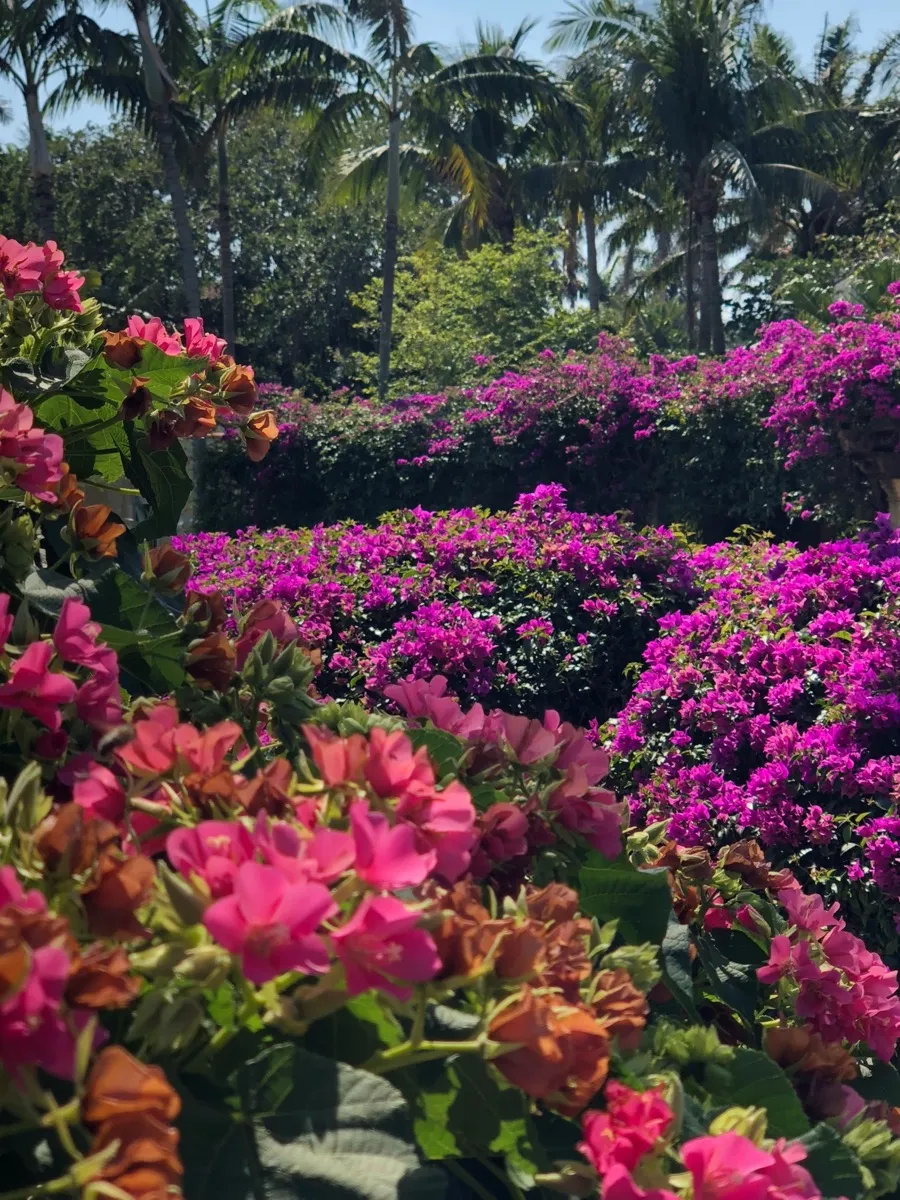
Nobody stands over a cutting yelling at it to root faster. You give it water, light, and time, and one week the roots are simply there. Rushing does nothing. Worse than nothing, really: a cutting you keep pulling out of the water to check is a cutting you are slowly killing. The plant already knows what to do. Your job is to set the conditions and then leave it alone.
That is not a gardening tip. It is the whole company.
rootr. only works when a real neighborhood has real abundance moving through it, and abundance cannot be manufactured. You cannot buy it, cannot fake it with a launch budget, cannot conjure the moment a neighbor decides the extra tomatoes are worth walking three doors down. You can only plant the conditions and tend them. So we are not launching in fifty cities. We are launching in two, on purpose, and staying until they are genuinely thriving.
slow, but relentlessly on purpose
There is a lazy kind of slow: slow because you are disorganized, slow because you are waiting for permission, slow because nothing is actually happening. That is not us. We are slow the way a well-run garden is slow. Everything is deliberate.
A gardener’s real skill is not planting. It is editing. You prune the sucker so the fruiting branch gets the sugar. You pinch the basil so it bushes out instead of bolting. You pull the thing that is failing before it shades out the thing that is thriving. Growth, in a garden, is mostly a long series of small, unsentimental decisions about where the energy goes.
We build rootr. the same way. We watch what actually takes root with real neighbors, the features people use, the swaps that keep happening without us, the parts of the loop that close on their own, and we lean into those. The rest gets pruned. We would rather do a few things well enough that they feel inevitable than a hundred things nobody asked for. Slow is not the opposite of serious. Done right, slow is what serious looks like.
plant love, and the road to zero waste
We started with plants because that is who we are, a couple of people with more cuttings than windowsills. But plant love, followed honestly, leads somewhere larger, and it leads there every time.
Here is the equation, and we mean it as plainly as it sounds: there is no version of loving plants that does not end in caring about the environment. Period. You cannot spend real time with a garden, a coop, a fruit tree, and stay indifferent to the dirt, the water, and the climate that let it grow at all. Plant love is not a hobby sitting next to environmentalism. It is the entry point to it. Care about one node rooting in a jar and you are, whether you meant to or not, already on the path to caring about the whole system that node depends on.
That is the full circle we are actually building, not a product roadmap. If you care about not wasting a healthy pothos cutting, you soon start caring about not wasting the forty pounds of tomatoes the same yard produces in August. Once you are watching the tomatoes, you notice the eggs, the citrus, the herbs going to seed, the whole quiet surplus a backyard throws off when it is happy. That is why harvest lives on rootr. It is plant love extended to everything the plant, the tree, and the coop actually make.
Then you look inside the house. The warehouse-store double-buy. The good, sealed, in-date food that sits on a shelf out of guilt until it is technically too old to give away. Not a gardening problem, but the same problem underneath: abundance with nowhere kind to go. So we built pantry, the shelf of things you would gladly hand a neighbor if handing it over were easy.
Plants, harvest, pantry. Three doors into one house, and the house is the environment itself. Waste less, feed people, stay close to the ground you actually live on. Roughly a third of the food the world grows is never eaten, and a startling amount of it dies of nothing more dramatic than not knowing which neighbor wanted it. Every jar that doesn’t hit a landfill, every division that doesn’t get composted out of neglect, is a small, real act of caring for the same environment the plant love started with. We are a map for that last mile.
small team, redwood plan
We are a small team, deliberately. We would rather be a small team that ships things that last than a large one that ships things that churn.
We think about redwoods often. Not because they grow slowly (young coast redwoods actually shoot up fast) but because of how they hold on. A redwood has no deep taproot. What it has instead is a wide, shallow root system that reaches out and physically interlocks with the roots of every other redwood around it. That is how a two-thousand-year-old tree survives storm after storm: not by being individually invincible, but by holding hands underground with the whole grove. Cut one down and its neighbors close the gap.
That is the network we are actually building. Not an app with users but a grove. Blocks where the roots have grown into each other, where the loop keeps running whether or not we are watching, where losing one gardener does not collapse the thing because the neighbors have already interlocked. That takes years, not quarters, and we are at peace with that. We are planting the two-thousand-year version.
why these two cities
People assume we picked Portland and Brevard County off a spreadsheet. We did not. We picked them because that is where we are.
Mat is in Satellite Beach, Florida. Sal is in Portland, Oregon. rootr. runs local because we believe growth is local. A swap network is not a market you enter, it is a block you already live on. We are not parachuting into these cities as management. Mat and Sal are on their own blocks as neighbors first: moderators, yes, but also members, gardeners, the person who leaves the extra citrus on the porch. If we are going to ask a neighborhood to trust the loop, we should be standing in it.
It is also a genuinely good experiment. Portland is temperate zone 8b, the most plant-obsessed city in America, dense walkable blocks and porch culture, fig cuttings and hostas and front yards that spill over the sidewalk. Brevard is subtropical zone 10a, spread out and suburban, cul-de-sacs and agave pups and mango gluts instead. A temperate rainforest and a barrier-island coastline. If the swap loop roots in both climates, botanical and social, it will root in most places in between.
our inboxes are open on purpose
Here is the part most companies bury. Mat and Sal read their own email.
- [email protected], Chief Plant Officer, Satellite Beach
- [email protected], Chief Growth Officer, Portland
- [email protected], both of us, and whoever grows the team next
Praise us. Yell at us. Complain, sincerely, because a complaint is just a map of where the loop is snagging. Tell us the porch handoff was awkward, the listing form has a silly field, the app did something strange on your phone. Best of all, collaborate. If you run a shop with daily surplus, if you want to help start swaps on your block, if you have a neighborhood that is ready, write us. We answer.
the power is yours
Here is the honest truth about our impact, and it is the opposite of a sales pitch: we cannot create any of it. We do not grow the tomatoes. We do not bake the extra loaf or divide the daffodils or box up the double-bought olive oil. Every ounce of good this does is produced by neighbors, one small surplus at a time. We just drew the map.
So we are not going to beg you to share. Begging would miss the point entirely. What we will do is tell you what is true, which is that the whole thing only works with your powers combined. One rooted cutting is a nice gesture. A whole block that roots and divides and lists its overflow is a genuine dent in what gets wasted and a neighborhood that actually knows itself. The impact was never ours to give. It was always yours to grow, together.
Two cities is exactly enough to prove the loop works in two very different climates. City no. 3 is not ours to choose, it is yours. Head to the homepage and cast your vote for which neighborhood is ready to start swapping.
We will get there. Slow, on purpose, and staying once we do.
see you around the block.
– mat and sal