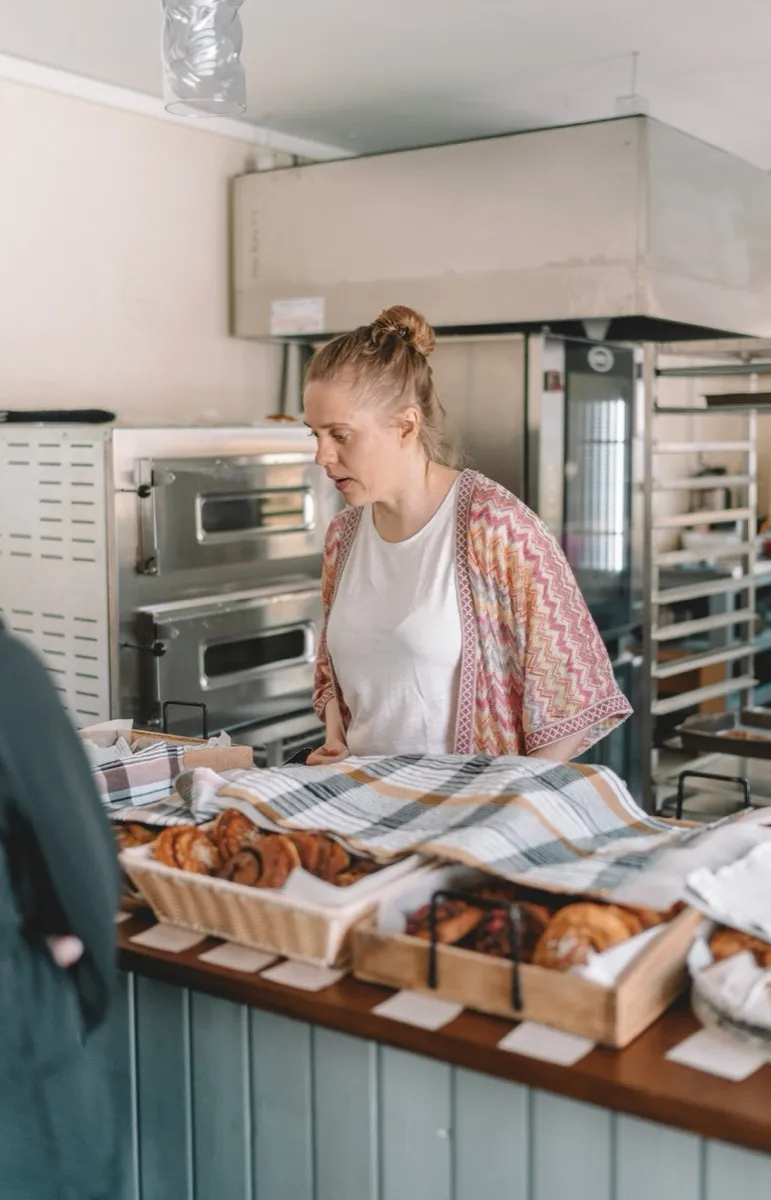
Neighborhoods are not the only ones sitting on more than they can use. The bakery at 4pm, with a case that has to be empty by close. The produce stand with yesterday’s stone fruit that is still perfect for a smoothie. The café with pastries that will not survive till morning. The refill shop with an overstock it cannot shelve. We are building a way to fold all of that into the same loop the block already runs on. We call it merchant hubs.
the surplus nobody planned to make
Retail food surplus is not a sign of a badly-run shop. It is structural. A bakery has to bake enough to look full at 2pm, which guarantees leftovers at 6. A grocer orders for a busy Saturday it cannot perfectly predict. Roughly a third of all the food the world produces goes uneaten, and a meaningful slice of that is exactly this: good, fresh, safe food that simply ran out of clock at the retail level. It was made in good faith to meet demand, and demand is lumpy.
The shop already knows this surplus is coming. What it has never had is a clean, local, low-drama way to move it to the neighbors standing three blocks away, the same neighbors on rootr. looking for exactly this.
how it works
A merchant hub will be a neighborhood-facing shop page on rootr. The shop lists exactly what it has, sets exactly its price (including free), and sets exactly its own pickup window. Neighbors nearby see it, claim it, and grab it before it goes to waste.
No blind surprise bags. No algorithmic markdown engine racing every shop’s prices to the floor. No bad reviews from bargain-hunters who never actually wanted a relationship with the shop. It is the same porch-pickup logic the whole network runs on, a clear item and a clear window and a clean handoff, just scaled from a front step to a front counter.
why not just discount it
Because a discount is a race to the bottom and a relationship is the opposite direction entirely.
A deep discount trains a customer to wait for the deal, cheapens the thing in their eyes, and brings in exactly the person who only ever wanted the markdown. A merchant hub does the reverse. The neighbor who grabs your surplus pastries on a quiet Tuesday becomes the regular who buys a full box on Saturday. The croissants move, and the relationship deepens. You recover margin on food that was otherwise a total loss, and you turn a waste line-item into local foot traffic and a familiar face. The surplus moves, the relationship stays. That is the whole trade.
It is also just good for the block. Every hub that opens is more good food staying in the neighborhood instead of heading to a dumpster, the same zero-waste loop we care about with cuttings and tomatoes, now including the shops that anchor a main street.
want in
If you run a small shop with unavoidable daily surplus, a bakery, a grocer, a café, a refill store, or a farm stand, you can be one of the first hubs on your block. It runs on the same porch-pickup logic as the rest of rootr., custom-fit to your counter and your hours, and Mat and Sal will set these up personally with the first partners, because getting them right matters more than getting them fast.