the no-kill guide to your first cutting.
start here if you've never snipped a stem ↓
Here is the secret nobody tells beginners. It is almost impossible to actually kill a cutting. Plants want to root. A stem lying on the ground in the wild had better be able to grow roots and become a new plant, or the species does not last. You are not performing surgery. You are giving a plant the chance to do the thing it evolved, over millions of years, to do. Your main job is staying out of the way.
why this works at all
A cutting can become a whole new plant because plant cells keep a superpower most animal cells lose. Many of them stay totipotent, capable under the right cue of becoming any kind of cell the plant needs. Snip a stem, and near the wound and the leaf-joints the plant activates dormant cells and orders them to become roots. Botanists call these newly-formed roots adventitious, meaning they appear where roots do not normally grow.
The signal that tells those cells to become roots is a plant hormone called auxin, which naturally pools at the base of a cutting once it is separated from the parent. That is the whole mechanism. You do not have to supply anything. You just have to give it the one spot it wants to root from, and that spot has a name.
where to cut
Find a healthy stem with at least one node, the slightly swollen bump where a leaf attaches to the stem. That node is the whole game. It holds the leaf-buds, the branch-buds, and the root-forming cells you care about. Cut below the node and it will root. Cut a bare length of stem with no node and it mostly just sits there and sulks.
Snip about a quarter-inch below a node with clean scissors or pruning snips. One node is the minimum, though two or three nodes on a cutting give you better odds and a sturdier young plant. Choose fresh, healthy growth over old woody stems for your first try, since younger tissue roots faster and more willingly.
what to cut with
Anything sharp and reasonably clean works. Kitchen scissors are fine. A clean, fairly sharp blade matters more than sterility for easy houseplants. A crushed, ragged cut heals slower and invites rot, while a clean slice seals and gets to work. Give your snips a quick wipe, with a little rubbing alcohol if you have it, so you are not carrying disease from one plant to the next, and you are set. This is a favor to a plant that was going to outgrow its pot anyway, not a procedure.
the glass of water
Strip off any leaves that would sit below the waterline. This matters. Submerged leaves rot, and rotting leaves foul the water and can take the whole cutting down with them. What you want in the water is bare node. What you want above it is a leaf or two to keep photosynthesis running while roots form.
Drop the cutting in a glass, node down and leaves up. Put it somewhere with bright, indirect light, not a scorching south windowsill that turns the glass into a warm bath and cooks the stem. Change the water every few days so it stays clear. Cloudy water is low on oxygen, and roots need oxygen, so fresh water keeps them breathing. That is the entire setup.
the part where you wait
Now, nothing. For about a week, visibly nothing happens, and this is where beginners panic and start poking. Do not. Resist every urge to pull it out and check, because each time you do, you snap the fragile new root initials forming inside. Nobody stands over a cutting yelling at it to root faster, and nobody helps by keeping it out of the water to inspect it.
Then, usually all at once, tiny white roots push out at the node. Give them another week or two to lengthen and multiply until you have several roots an inch or two long, and it is ready for soil.
why your pothos will forgive you
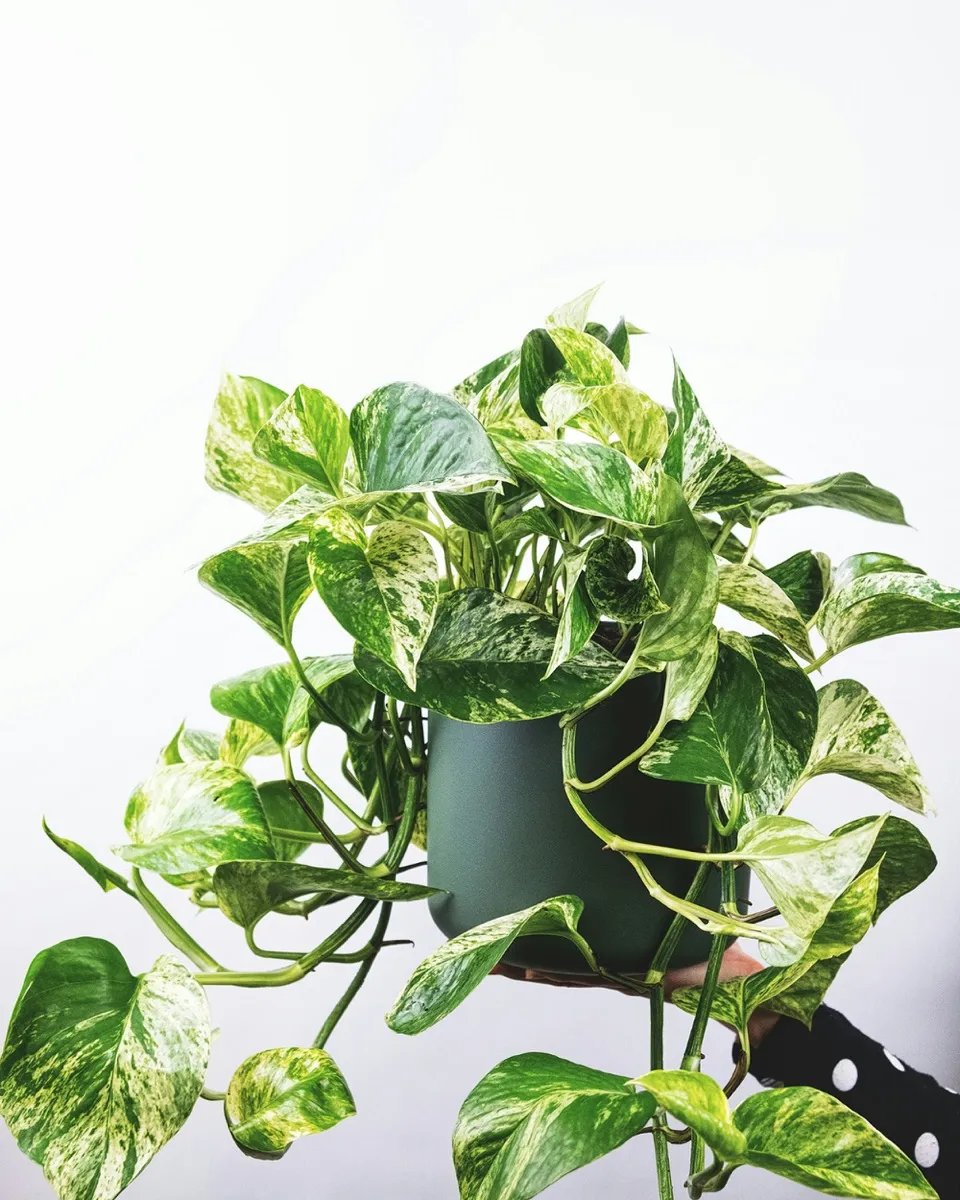
Not all plants root equally. For a first cutting, stack the deck. Pothos, heartleaf philodendron, and tradescantia are famously, almost comically forgiving. They root from cuttings that would make a fussier plant give up, and they do it fast. Coleus, mint, and basil are nearly as easy if you would rather start with something you can eat or smell.
Start with one of those and you will very likely succeed on your first try. When you do, you will have exactly two things you did not have this morning: a second plant, and a story to tell the neighbor when you hand it to them. That handoff, the rooted cutting passed over a fence, is where rootr. actually begins. It starts with one node and a glass of water.