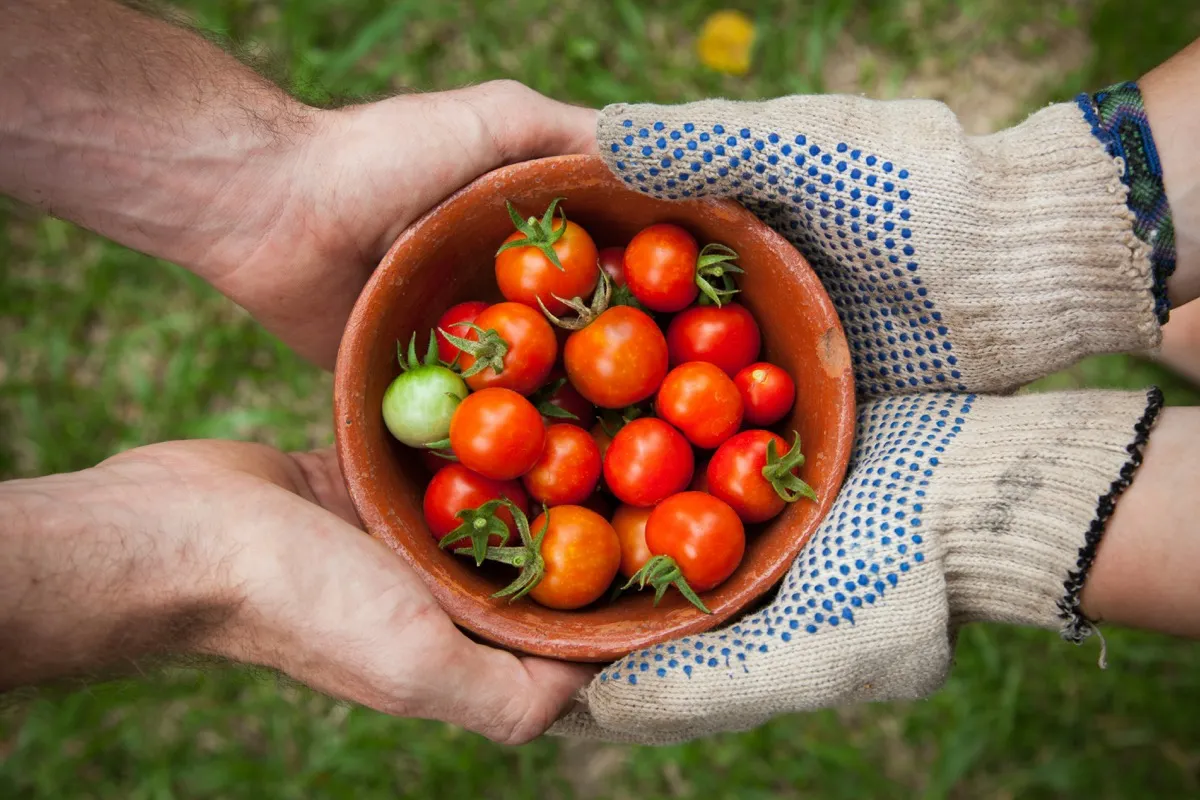
sharing food with neighbors, without the awkward.
the three-word rule for a clean handoff ↓
The number one thing that keeps good food stuck in the wrong cupboard is not logistics. It is a small, specific fear: what if it is weird? What if they think I am pawning off junk. What if I am the person who took the sketchy jar. That fear is doing more to feed landfills than any spoilage ever has.
So here is the rule that dissolves all of it. Three words: unopened, in date, honestly labeled. Get those right and the awkwardness has nowhere to live.
unopened.
If it is sealed, it is easy. Shelf-stable pantry surplus, the warehouse-store double-buy, the flavor you did not love, the ingredient for a recipe you never made, is the lowest-friction food on the whole network. Nobody has to trust your kitchen, your counters, or your cat. They just have to read a label on a factory seal. This is why sealed pantry goods are the safest, simplest place to start sharing. The trust is already built into the packaging.
in date.
Check the date, say the date. “Best by October” is a complete sentence and it does all the work. Know what you are actually reading, too. In the US those dates are set by manufacturers and are almost always about quality rather than safety, especially “best by” and “sell by.” Most sealed pantry food is fine well past the printed date. But that is the recipient’s call to make with full information, never yours to hide or fudge. Say the date plainly and let them decide. The one date to treat as a real limit is on infant formula, which is federally regulated, so do not share formula past its use-by date.
honestly labeled.
For harvest and homemade goods, like eggs, sourdough discard, a loaf of bread, a jar of jam, or a bag of lemons, write the one thing you would most want to know.
- “Collected Tuesday. Unwashed, kept cold.” (eggs)
- “Baked this morning. Contains walnuts.” (bread)
- “Made yesterday, kept refrigerated. Has honey, not for babies.” (a preserve)
Honesty is not a disclaimer that makes you look worse. It is the entire trust layer, and it makes you look more generous, not less. Allergens are the non-negotiable part of honest labeling: nuts, dairy, eggs, wheat and gluten, soy, sesame, shellfish. A neighbor with a serious allergy is relying on that one line completely. When in doubt, over-share the ingredients. It costs a few extra words, and it is the difference between a kind gesture and a genuinely dangerous one.
the quiet rules worth knowing
Two things keep neighborly sharing both legal and safe, in plain English.
- Gifting is not selling. Most states have cottage-food laws that tightly regulate the selling of homemade food, but freely sharing it with neighbors sits in friendlier territory. rootr. is built for the giving loop, surplus passed along, not a home business. If you ever want to cross into selling regularly, that is the moment to look up your state’s cottage-food rules. For a jar handed over a fence, you are just being a good neighbor.
- Mind the danger zone with perishables. Bacteria multiply fastest between 40°F and 140°F, so anything perishable should not sit out more than about two hours, or one in real summer heat. Keep the cold things cold, with a cooler bag or ice pack on the porch, and the hot things either genuinely hot or promptly chilled. Sealed and shelf-stable? Share freely. Perishable and homemade? Share fast, cold, and clearly labeled.
the handoff itself
Leave it on the porch. Name a pickup window. Wave from the door, or do not. The best swaps are not ceremonies. They are a box, a tote bag, and a “thanks, this is great” text an hour later. Honest, sealed or cold, allergen-clear, and gone before it could ever go to waste.
That is the entire ritual. Three words on masking tape beat any terms of service ever written.