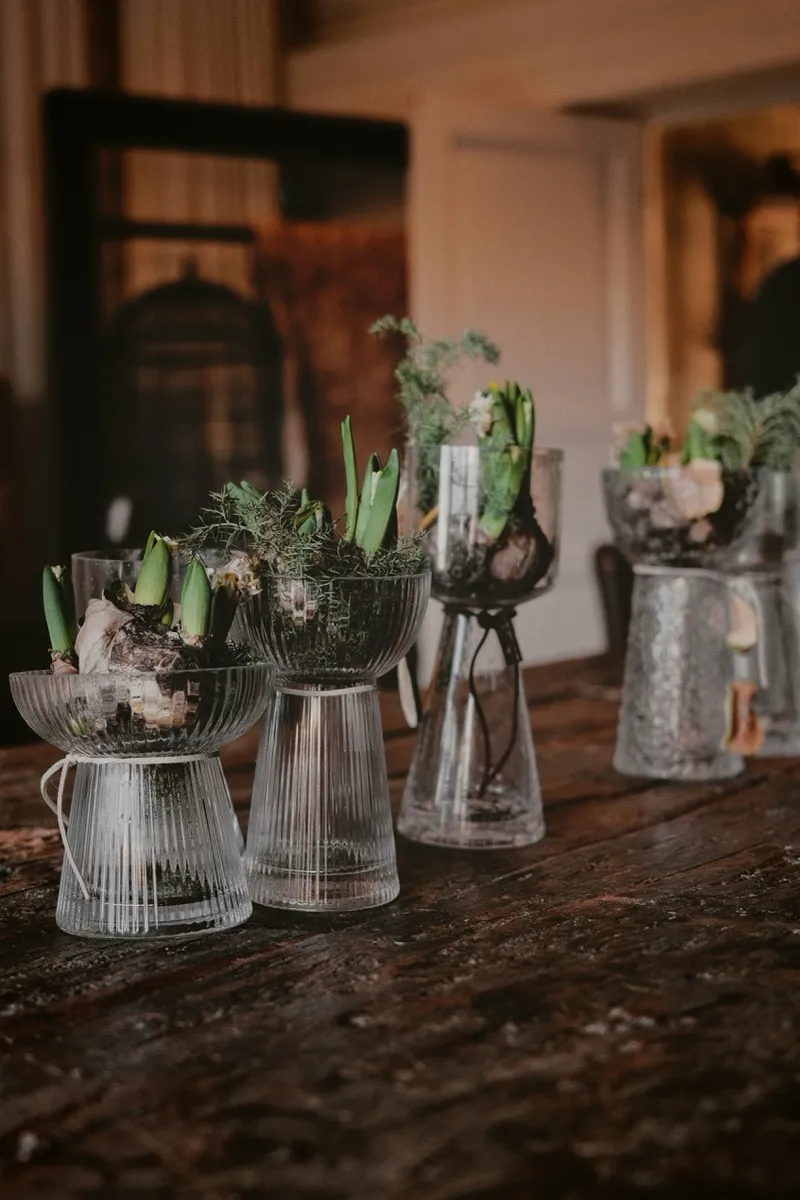
Here is a secret that quietly turns one gardener into a whole street of them: most of the flowers everybody admires in April are free, if you know when to dig. Fall is bulb-dividing season, and it is the most generous swap on the calendar. But the work starts now, in spring, with a golf tee and thirty seconds of foresight.
what a bulb actually is, and why it multiplies
The thing we call a bulb is a plant’s savings account. A true bulb, like a daffodil, a tulip, or an allium, is a compressed underground stem wrapped in fleshy scale leaves, all of it packed with starch and, crucially, the pre-formed flower the plant built last year for next year. Crocus and gladiolus grow instead from corms, which are solid swollen stems. Bearded iris grows from a rhizome, a fat horizontal stem. Daylilies grow from tuberous roots. They work a little differently, but the swap logic is identical. They all copy themselves.
A daffodil does not simply sit there. Each season the mother bulb splits off small offsets, called bulblets, around its base. Crocus corms stack new corms on top of spent ones. Iris rhizomes creep outward and branch. Left completely alone, a single bulb you planted five years ago is now a tight fist of a dozen. That is the good news. The catch is that the fist gets too tight.
why crowding makes them bloom less
Overcrowded bulbs start to “go blind,” producing all leaves and no flowers. Gardeners have a folk name for it and botanists have a duller one, but the cause is the same. Too many bulbs competing for the same water, light, and nutrients means none of them stores enough energy to build next year’s flower, so the plant defaults to survival mode: keep the foliage, skip the expensive bloom.
Dividing, then, is not charity you perform at your own expense. It is the thing that makes your own patch flower harder. Every clump you dig and split is a gift to a neighbor and a favor to yourself at the same time. In the most literal sense, the plant is asking to be shared.
why you flag them now, in bloom
Here is the trap. You divide bulbs when they are dormant, and when they are dormant you cannot see them. By September the daffodil foliage has yellowed and vanished, and you are standing over a blank patch of dirt with a shovel, guessing. Guess wrong and you slice straight through the bulbs you meant to lift.
So mark them while they are showing off. Right now, in bloom, walk the yard and flag every clump that looks dense and gorgeous, because those are the ones ready to divide. Use a golf tee, a labeled paint stick, a bamboo skewer, a dropped pin on a garden-map photo, whatever you will still understand in four months. Note the color while you can see it. Future-you, standing over that blank dirt in fall, will be embarrassingly grateful.
Do not cut the foliage down after the flowers fade, by the way, even though it looks tired. Those yellowing leaves are busy photosynthesizing next year’s flower back into the bulb. Let them die back completely on their own. That is the bulb making its deposit.
the swap itself, in fall
When the foliage has fully yellowed and flopped, roughly September through October in Portland’s zone 8b and a touch later where the ground stays warm, it is time.
- Lift gently. Dig wide, well outside the clump, and lever the whole mass up rather than spearing into it. A garden fork beats a spade for this.
- Divide by hand. Brush off the loose soil and pull the bulbs apart with your fingers, since they usually separate at natural seams. Keep the plump, firm ones and toss anything soft, mushy, or moldy. For iris rhizomes, snap off firm outer sections with a fan of leaves and discard the spent woody center.
- Keep a few, list the rest. Replant your own with room to grow. A good rule is three times the bulb’s own height deep, pointy end up, spaced a bulb’s width or two apart.
Bulbs are the perfect porch handoff: dry, dormant, hard to kill, and in no hurry. Label the bag with the color and one line of instructions, something like “daffodil, yellow, plant 5 to 6 inches deep, pointy end up, fall,” and you have handed a neighbor next April’s front yard in a paper sack.
a note on the poison ones (it is a feature)
Daffodils and most narcissus contain lycorine and other alkaloids that make them mildly toxic, which is exactly why deer, squirrels, voles, and gophers leave them alone. If your block fights wildlife, daffodils are the low-drama, plant-it-and-forget-it swap. Do mention it on the label if you are handing bulbs to someone with a curious dog or toddler: pretty, generous, and not for eating.
A street where everyone divided their bulbs one fall becomes a street that blooms together every spring, in waves, for years, at no cost to anyone. That is the whole idea, planted early, on purpose, in May.